Medical Treatment
Solutions to relieve your symptoms without surgery.
Medical treatment is always offered first-line, except in severe cases.
Mainly night-time symptoms.
Often resolves after childbirth.
Patients who cannot undergo surgery.
Holds the wrist in a neutral position.
Durée
1 to 3 months
Efficacité
Good
Reduces local inflammation.
Durée
7 to 10 days
Efficacité
Moderate
Corticosteroid injection.
Durée
Several months
Efficacité
Excellent
Specific exercises.
Durée
Several weeks
Efficacité
Variable

Wearing a night rest splint helps relieve symptoms by keeping the wrist in a neutral position during sleep
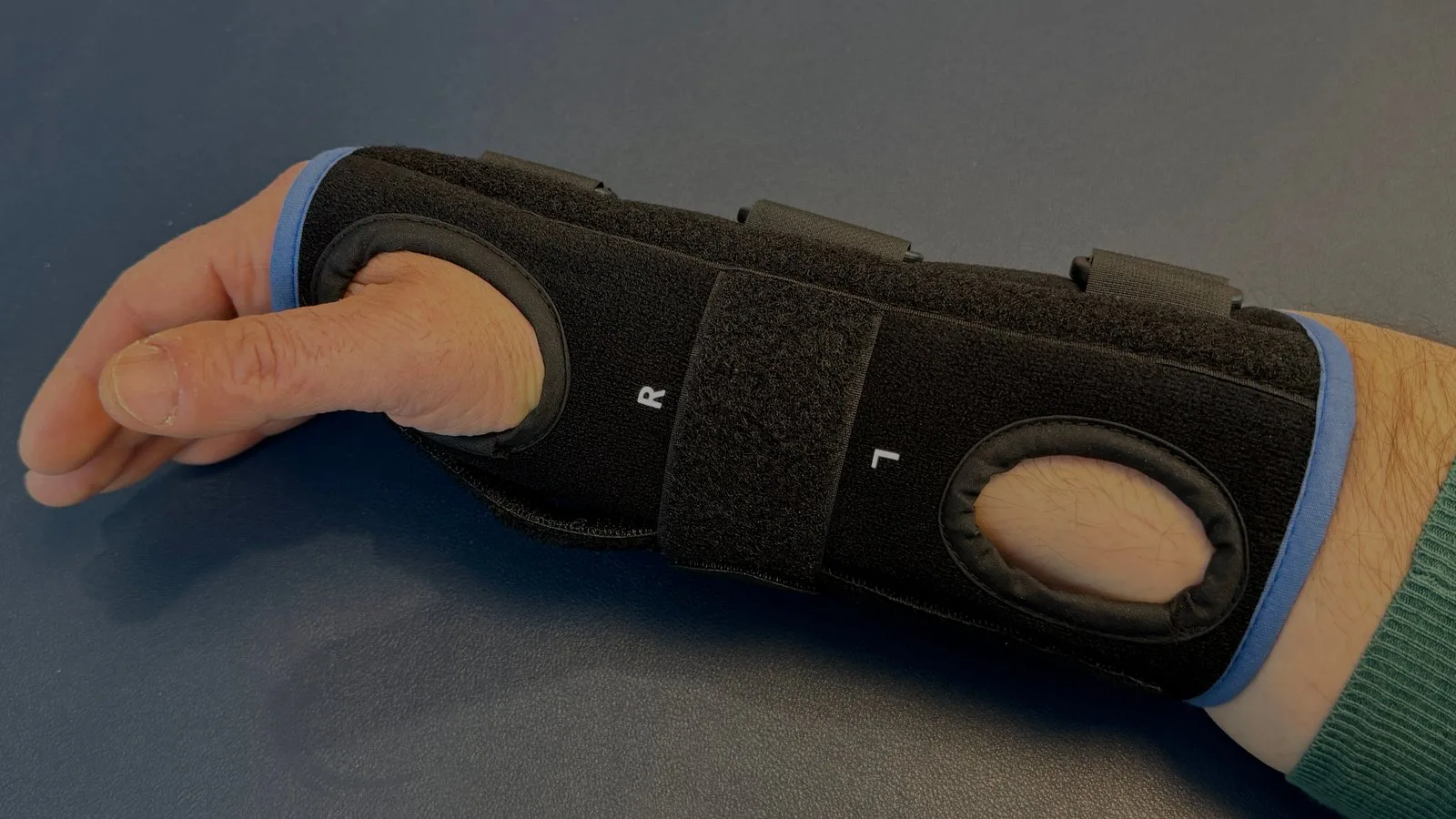
The wrist splint (or orthosis) is a medical device that keeps the wrist in a neutral position, reducing pressure on the median nerve. Regular wear, particularly at night, helps reduce nocturnal symptoms and allows the nerve to rest. This non-invasive approach is often recommended as the first-line treatment for mild to moderate forms of carpal tunnel syndrome.
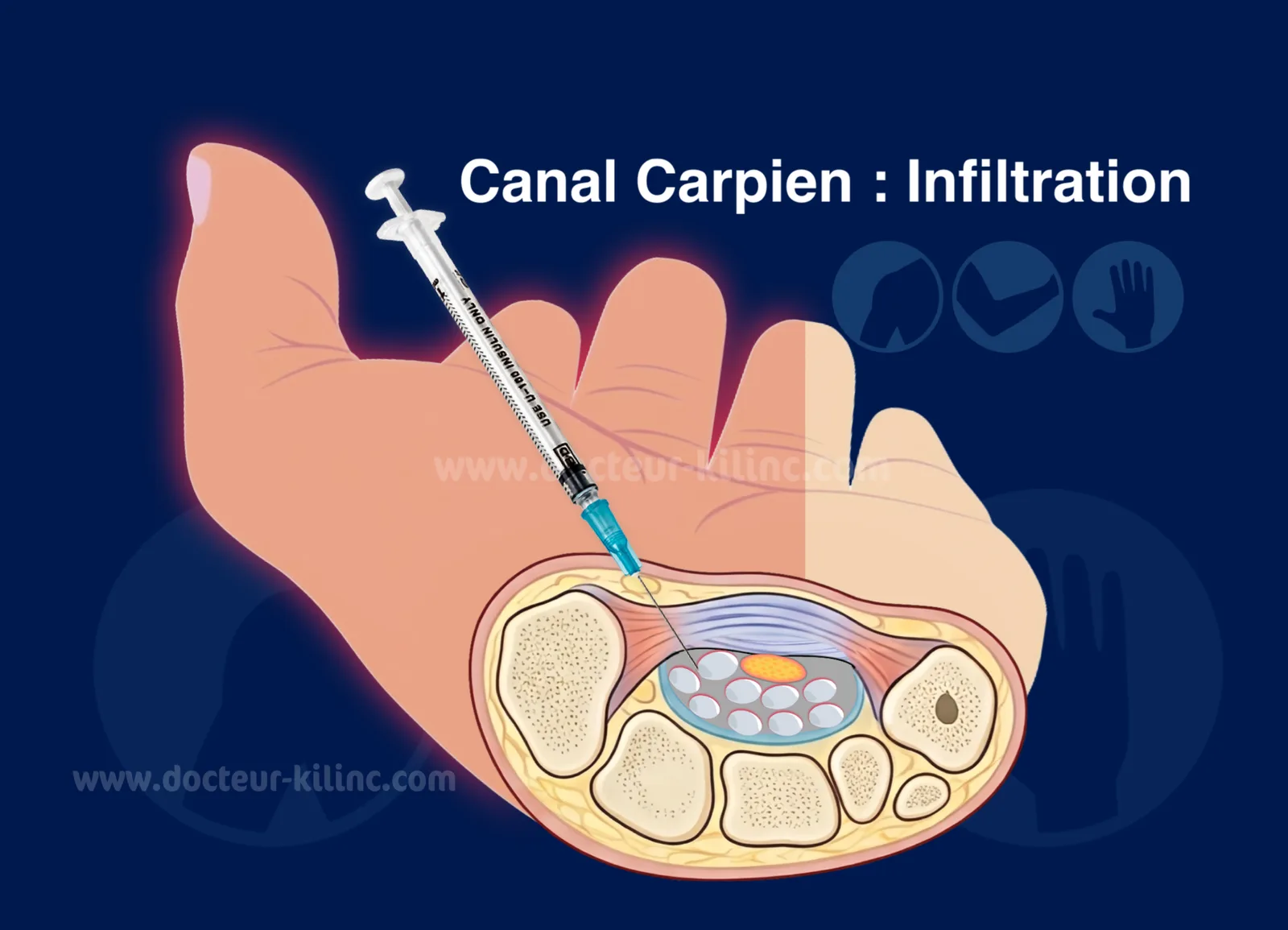
An injection consists in administering corticosteroids directly into the carpal tunnel to reduce inflammation and median nerve compression. This technique provides rapid symptom relief and can be repeated if necessary.
Injections are mainly indicated in mild forms. They represent an intermediate option between conservative medical treatment and surgery, particularly useful for patients who do not respond to other treatments or who wish to avoid a surgical procedure.
Indications: Injections are proposed as a first-line option for mild to moderate forms, or when symptoms are recent. They are also useful if you cannot (or do not wish to) undergo surgery in the short term.
Medical treatment has limitations that should be understood:
If it fails, surgery becomes necessary.
In a network meta-analysis comparing all available injections for carpal tunnel syndrome, PRP (platelet-rich plasma) ranks as the second-best option after corticosteroids and oestrogens, with a favourable safety profile. However, the studies remain small, PRP preparation protocols are heterogeneous, and follow-up rarely exceeds 6 months.
PRP improves patients' subjective outcomes but has little effect on the cross-sectional area of the median nerve or on motor nerve conduction parameters. PRP represents a non-surgical option for mild forms, but the evidence remains preliminary: the studies are still too few and too heterogeneous to make it an established first-line recommendation.
In addition, this treatment remains expensive and is not reimbursed, as the evidence for its efficacy is still limited.
Rehabilitation has a specific place in the management of carpal tunnel syndrome, although its role remains debated. It is mainly based on neuromobilisation techniques and tendon gliding exercises. The aim is to restore the mobility of the median nerve within the carpal tunnel. These exercises aim to reduce tissue adhesions and promote drainage of local oedema. They are particularly useful in mild to moderate forms or as a complement to other conservative treatments.

Hand Surgeon
Hand & Upper Limb Surgeon
20+
Years of experience
99%
Day-case & video-surgery
Dr Alexandre Kilinc — orthopaedic surgeon, qualified in orthopaedic and trauma surgery (RPPS 10100025286). Practice dedicated to the upper limb for 20 years. Member of the scientific committee of the French National Carpal Tunnel Registry. President of the Île-de-France Hand Prevention Network. Co-founding member of SOS Main Quincy (2012).
Mostly minimally invasive carpal tunnel surgery · Day-case surgery · Regional anaesthesia · Paris Jouvenet 16 and SOS Main Quincy
Orthopaedic surgery, SOS Main and microsurgery of the hand. Mostly minimally invasive techniques (endoscopic, ultrasound-guided) · Day-case surgery · Regional anaesthesia.
Fellowship at Columbia University NYC · ALPS Shoulder Institute · University teacher (DIU) · Former Chef de clinique at CHU Saint-Antoine
Systematic nerve conduction study (EMG) before surgery · Informed consent · Structured post-operative follow-up · Verified Doctolib reviews